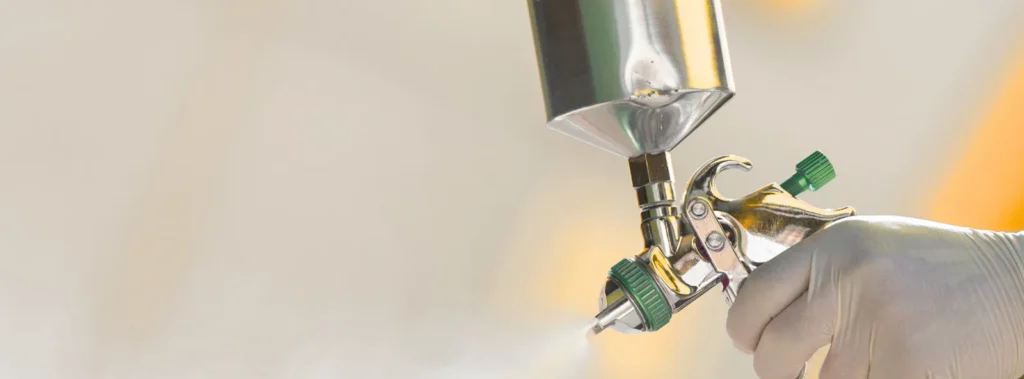
At Sprayzone we have extensive experience of spraying aluminium framing to curtain walling systems on commercial offices, schools and other public buildings and are frequently specified to complete curtain wall spraying projects at sites across the UK, where a durable and professional quality finish is required to both internal and external surfaces.
Following thorough surface preparation, excellent adhesion is achieved to all aluminium substrates using our range of etch and two pack epoxy primers. The finishing coat is a fast drying two pack acrylic, which utilises the latest resin and pigment technology to provide a durable finish to both internal and external sections.
Minimal disruption
Applied by our skilled spraying teams, we guarantee to transform your existing curtain walling with minimal disruption to your business or customers.
To find out more about our curtain wall spraying service, please contact us today on 023 8070 4238.

Key features

Professional quality, durable finish
Full range of BS & RAL colours
10 year warranty available
Unique resin & pigment technology
Extremely fast drying
Wide range of gloss levels
Internal & external surfaces
Water & solvent based options
Curtain wall spraying case studies


“We have contracted Sprayzone for a few jobs now and have always found them easy to deal with”

Sue
Epic Display
Curtain Wall Paint Spraying FAQs
General
What is curtain wall paint spraying?
Curtain wall paint spraying is the on-site refinishing of the aluminium framing of a curtain wall façade, including mullions, transoms, pressure plates, cover caps and spandrel panels. Rather than removing and replacing the framing, specialist contractors clean, prepare and re-coat the existing metalwork in place, usually using spray equipment designed for architectural metal coatings.
Why would a building owner choose to respray rather than replace the curtain wall?
Respraying is typically a fraction of the cost of replacement and causes far less disruption. Where the curtain wall is structurally sound and remains weathertight, but the finish has faded, chalked, peeled or simply looks dated, respraying restores the appearance without the expense, programme length and planning implications of a full façade replacement. It also has a much lower environmental impact, because the existing aluminium stays in service.
What are the signs that a curtain wall needs respraying?
Common signs include colour fading or loss of gloss, chalking (a powdery residue when the surface is rubbed), flaking or peeling coating, filiform corrosion creeping out from edges and fixings, staining that cannot be cleaned off, and a desire to change the colour as part of a wider refurbishment or rebrand.
Can any colour be achieved?
Yes. Coatings can usually be supplied in virtually any RAL colour, as well as bespoke matches to an existing finish.
Coatings and Performance
What type of paint is used?
Original curtain wall finishes are usually factory-applied polyester powder coat. These require oven curing, so they cannot be reapplied on site. Field-applied systems are therefore liquid coatings designed to cure at ambient temperature, most commonly two-pack polyurethane or air-drying systems, applied over a suitable adhesion-promoting primer where the substrate requires it.
How long will an on-site sprayed finish last?
With correct preparation and a quality coating system, a respray can typically be expected to last in the region of 10 to 20 years, depending on the product, colour, building exposure (coastal and industrial locations are more aggressive) and how well the façade is maintained. Manufacturers’ published data and the specific warranty offered should be checked for each project.
Is a sprayed finish as good as the original factory coating?
A properly specified and applied field coating can deliver excellent appearance and durability, but it is not identical to an oven-cured factory finish. The quality of the result depends heavily on surface preparation, environmental conditions during application and the skill of the operatives. Using an approved applicator working to the coating manufacturer’s specification is the best way to achieve a comparable result.
Are manufacturer warranties available?
Yes. Many coating manufacturers offer product guarantees. Typically, these are 10-year warranties but for some paint systems they can be up to 25 years. These manufacturer warranties are supplied when the work is carried out by an approved applicator (such as Sprayzone) and inspected during the works. Insurance-backed guarantees may also be available. Always confirm what is covered, such as adhesion, colour retention and chalking, and what maintenance is required to keep the warranty valid.
Preparation and process
What does the process involve?
A typical process would be as follows: agreement of colour (and where required, sample panel); installation of access equipment; thorough cleaning and degreasing; abrading or keying the surface; repair of any damaged or corroded areas; masking of glass, gaskets, seals and surrounding surfaces; application of primer where required; application of topcoat(s); de-masking; and final inspection and snagging.
Why is surface preparation so important?
Contaminants such as grease, silicone, traffic film and chalking residue prevent the new coating from bonding properly. Cleaning, degreasing and abrading the surface to create a mechanical key are essential for long-term adhesion.
How are the glass, gaskets and seals protected?
All glazing, gaskets, silicone joints, vents, signage and adjoining materials are carefully masked with protective films, tapes and sheeting before spraying begins. Overspray control is a key skill of a specialist contractor. Gaskets that are perished or shrunk may be replaced as part of the works, and it is often sensible to review sealant joints at the same time.
How is the quality of the work checked?
Work is checked by the site supervisor and contracts team. Many coating manufacturers will carry out their own site inspections where a product guarantee is being issued.
Is a sample or test area provided?
A sample is provided if requested / required.
Site Conditions and Logistics
Can the work be carried out in any weather?
No. Spraying must not take place in rain, high winds, or when temperatures or humidity fall outside the coating manufacturer’s limits. A common rule is that the substrate temperature must be at least 3°C above the dew point. Wind is a particular concern because it affects overspray and finish quality. Programmes should therefore allow for weather delays, and much work is planned for the spring to autumn period.
How is the façade accessed?
Access depends on the building height and layout. Options include mobile elevating work platforms (cherry pickers and scissor lifts) and fixed scaffolding.
Can the building remain occupied during the works?
In most cases, yes. Work is carried out externally, and the coatings used are formulated to minimise odour. Contractors usually work elevation by elevation and can coordinate with building management to keep entrances open, temporarily close windows or air intakes near the work area, and schedule noisier or more disruptive tasks out of hours where needed.
How long does a typical project take?
Duration depends on the façade area, complexity, access method and weather. A small shopfront may take a few days, while a multi-storey office block may take several weeks or months. A contractor’s survey will provide a programme specific to the building.
Is the interior side of the curtain wall sprayed too?
It can be. Internal framing is often refinished to match a new external colour. Internal work requires additional protection of floors, furniture and fittings, and is usually carried out out of hours in occupied buildings using low-odour products and suitable ventilation.
Health, safety and environment
Is curtain wall spraying safe?
When carried out by trained operatives with proper risk assessments, method statements and permits, it is a well-controlled activity. Key risks include working at height, handling coatings and solvents, and protecting the public from overspray and falling objects. Exclusion zones, protective screening and appropriate personal protective equipment are standard on well-managed sites.
Are the paints harmful to the environment?
Modern architectural coatings are increasingly low-VOC (volatile organic compounds), and many water-based options are available. Respraying also avoids sending large quantities of aluminium and glass to recycling or landfill, and avoids the embodied carbon of manufacturing a replacement façade, making it a comparatively sustainable choice.
Will overspray damage cars or neighbouring property?
A competent contractor will control overspray through masking, screening, correct spray technique, appropriate equipment and by not spraying in windy conditions. Car parks and pavements near the work area are often cordoned off or protected.
Costs and maintenance
How much does curtain wall respraying cost?
Costs vary with façade area, number of colours, the level of preparation required, access requirements and building location. Access can represent a significant proportion of the overall cost on taller buildings. An accurate quotation requires a site survey, but respraying is generally much more economical than replacing the curtain wall.
Do I need planning permission to change the colour?
This depends on local regulations. Repainting in the same colour rarely needs consent, but a significant colour change may require planning permission, particularly for listed buildings, buildings in conservation areas, or where planning conditions control the external appearance. Check with the local planning authority before committing to a new colour.
How should the new finish be maintained?
Regular washing, typically once or twice a year and more often in coastal or polluted areas, using clean water and a mild, neutral detergent will help maintain appearance and is usually a condition of the guarantee. Abrasive cleaners, strong solvents and high-pressure jet washing at close range should be avoided. Any damage should be touched up promptly to prevent corrosion.
Can other façade elements be sprayed at the same time?
Yes. Window frames, doors, louvres, cladding panels, fascias, canopies, balustrades and other metalwork can usually be refinished as part of the same project, often using the same access equipment, which improves value and gives a consistent finish across the building.
How do I choose a contractor?
Look for a specialist with proven experience of on-site architectural coatings, approval from the coating manufacturer, appropriate access and safety accreditations, adequate insurance, and a portfolio of similar projects. Ask for a detailed method statement and specification, and confirmation of the guarantees offered.